
ESE Faculty Labs + Groups
Device Research and Engineering Laboratory
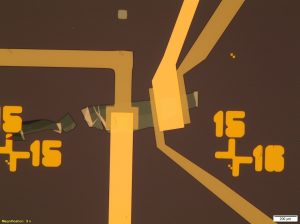 The Device Research and Engineering Laboratory, led by Deep Jariwala studies fundamental physical phenomena in low-dimensional materials systems. The mission of the lab is to develop new designs and architectures for solid-state electronic, optoelectronic, photonic and magnetic devices primarily using the unique physical properties enabled by physical and quantum confinement in materials with applications ranging from computing, renewable energy, communications, sensing and medicine.
Electronic Photonic Micro-Systems Lab
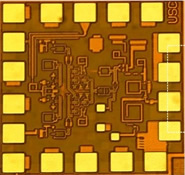 The EPM Lab, led by Firooz Aflatouni, studies integrated electronic-photonic co-design with the goal of improving the performance of electronic systems using photonic devices and improving the performance of photonic systems by incorporating electronic devices and techniques. Applications of electronic-photonic co-design include communication, imaging, Radar, LIDAR, and multi-modal bio-sensing.
The Engheta Group
 The Engheta Group, run by Nader Engheta, explores several foci and themes, extensively, including: Metamaterials, Metasurfaces, and Plasmonics; Quantum Metaphotonics and Nanoscale Optics; ENZ, MNZ, and EMNZ Structures; Modularized Nanophotonics, Optical Metatronics and Informatic Metastructures.
Implementation of Computation Group
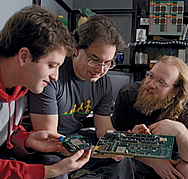 The Implementation of Computation Group, under André DeHon, studies how we physically implement computations. Efforts span from algorithms and problem descriptions, through compute models, architectures, and runtime systems, and down to physical substrates, including work on design mapping between these levels.
Cherie R. Kagan Research Group
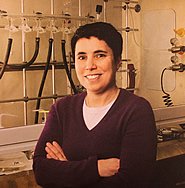 The Kagan Group, led by Cherie Kagan, explores the chemical and physical properties of nanostructured and organic materials and integrates these materials in electronic, optoelectronic, optical, thermoelectric and bioelectronic devices. They combine the flexibility of chemistry and bottom-up assembly with top-down fabrication techniques to design novel materials and devices.
Kod*lab (within GRASP)
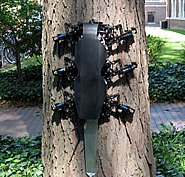 Dan Koditschek leads Kod*lab, a research group interested in the application of dynamical systems theory to the invention and construction of intelligent machines and systems, with a particular focus on biologically inspired robotics. Many lab members have worked in robotics with emphasis on dynamical dexterity and the management of kinetic energy in designing machines capable of performing useful work on their bodies and environments.
MicroSensors and MicroActuators Group
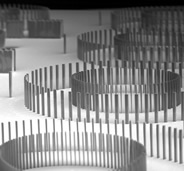 The MicroSensors and MicroActuators (MSMA) Laboratory is dedicated to advancing the state of the art of microfabrication and nanofabrication technology, with emphasis on new approaches to fabricate devices with characteristic lengths in the micro- to nanoscale from both silicon and non-silicon materials; and demonstrating these devices in multiple application spaces ranging from energy storage, harvesting, and conversion to biomedical structures and devices.
mLAB: Real-Time & Embedded Systems Lab
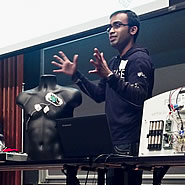 mLab, directed by Rahul Mangharam, is a group of electrical, bio-medical, mechanical and computer engineers and scientists who collectively work on problems related to Cyber-Physical Theory and Systems (CPS). We focus on domains spanning Networked CPS, Automotive CPS, Medical Devices Software & Systems and Real-Time Parallel Computing.
Quantum Engineering Lab
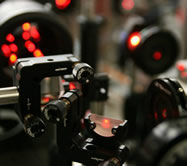 The Quantum Engineering Lab, under the direction of Lee Bassett, studies quantum dynamics in nanoscale materials and devices using optics and electronics. They seek to better understand complex quantum-mechanical systems, with a goal of developing new technologies for communication, computation, and sensing based on quantum physics.
Cross Disciplinary Labs
Distributed Systems Laboratory (DSL)
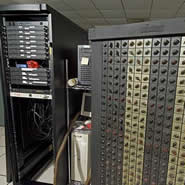 The Distributed Systems Laboratory (DSL) combines elements from the CIS and ESE departments. The DSL is broadly focused on the issues of merging computation and communications. This includes networking, computers, distributed control, distributed systems, computer operating systems, gigabit networks, networked multimedia systems, and user interfaces.
Multimedia and Networking Lab
 The Multimedia and Networking Lab is a pluri-disciplinary lab that cuts across layers, from the link layer to the application layer, with a focus on investigating problems and technologies associated with modern telecommunications systems. The Lab involves several faculty members and collaborators at both Penn and other institutions, including other universities and industrial research labs. Many doctoral students, as well as a number of master’s and undergraduate students also participate in the lab.